
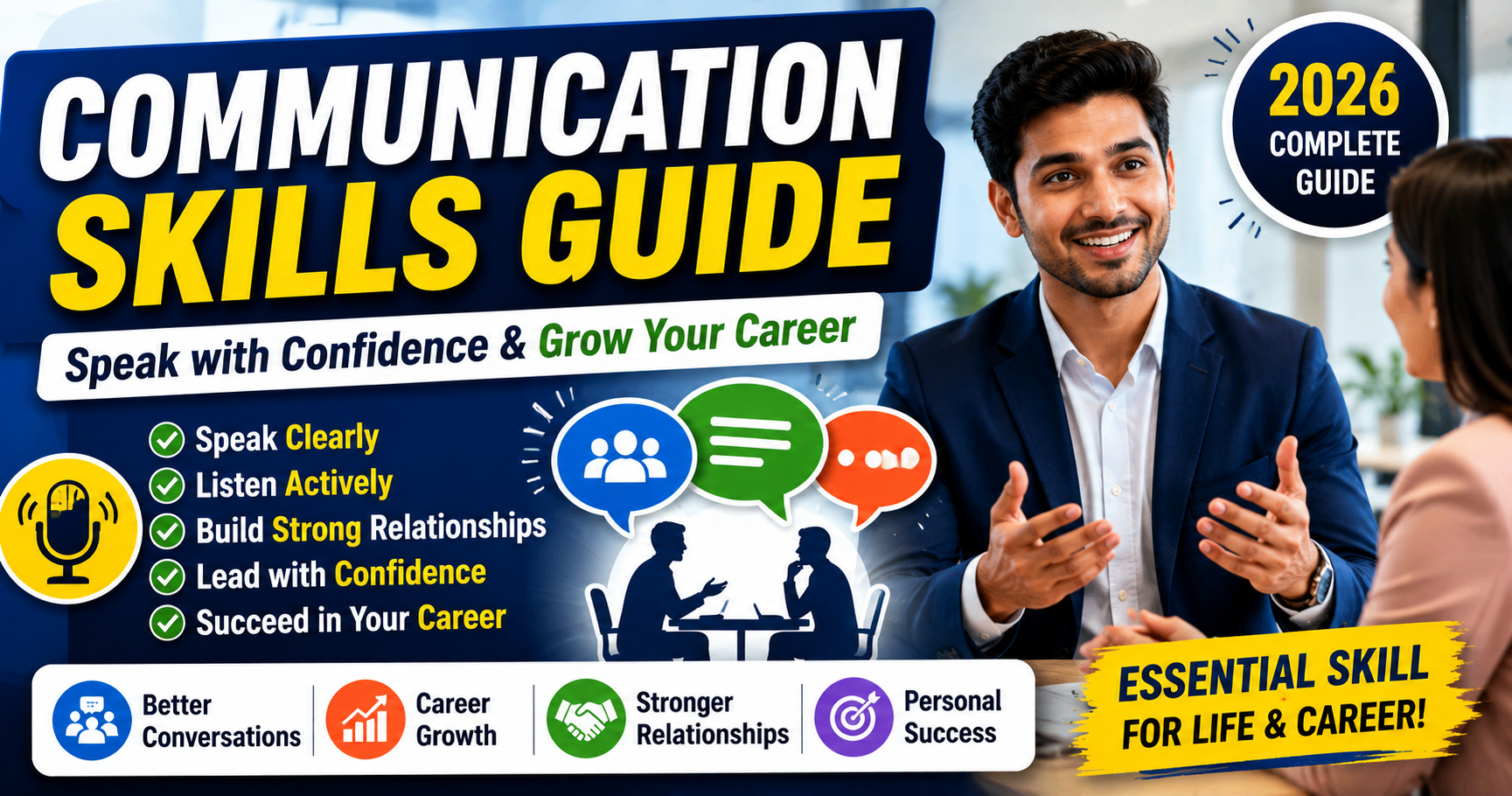
Communication Skills Guide (2026): Improve Your Communication for Career Success
Communication is one of the most valuable skills a person can develop. Whether you're a student, job seeker, employee, entrepreneur, or business owner, your ability to communicate effectively can influence your career growth, relationships, leadership, and overall success.
Strong communication skills are not just about speaking well—they also involve listening, understanding others, expressing ideas clearly, and building meaningful relationships. In today's digital world, communication happens through face-to-face conversations, emails, phone calls, video meetings, social media, and instant messaging. Learning how to communicate effectively across these channels is an essential life skill.
What Are Communication Skills?
Communication skills are the ability to exchange information, ideas, thoughts, and emotions clearly, respectfully, and effectively. Good communication helps avoid misunderstandings, solve problems, and build trust.
Why Communication Skills Matter
Good communication can help you:
- Perform better in job interviews
- Build stronger relationships
- Become a better leader
- Improve teamwork
- Resolve conflicts peacefully
- Increase self-confidence
- Advance your career
- Provide better customer service
- Present ideas more effectively
Types of Communication
1. Verbal Communication
Verbal communication includes face-to-face conversations, phone calls, presentations, meetings, and interviews. Speaking clearly, using an appropriate tone, and organizing your thoughts are key to effective verbal communication.
2. Non-Verbal Communication
Body language often communicates as much as words. Examples include:
- Eye contact
- Facial expressions
- Posture
- Hand gestures
- Personal space
3. Written Communication
Written communication includes:
- Emails
- Reports
- Resumes
- Cover letters
- Messages
- Documentation
Clear, concise, and grammatically correct writing leaves a professional impression.
4. Visual Communication
Charts, graphs, presentations, infographics, diagrams, and videos can help explain complex information more effectively.
Essential Communication Skills
1. Active Listening
Good communicators listen carefully before responding. Active listening involves paying attention, asking relevant questions, and confirming understanding.
2. Confidence
Confidence allows you to express your ideas clearly while remaining respectful and open to feedback.
3. Clarity
Keep your message simple, organized, and easy to understand. Avoid unnecessary jargon unless your audience expects it.
4. Empathy
Understanding another person's perspective helps build stronger relationships and encourages respectful communication.
5. Emotional Intelligence
Recognizing and managing your emotions, while understanding others' feelings, supports productive conversations.
6. Adaptability
Adjust your communication style based on your audience. The way you speak to a customer, manager, or friend may differ.
Communication Skills for Job Interviews
- Introduce yourself confidently.
- Speak clearly and at a comfortable pace.
- Listen carefully before answering.
- Support your answers with examples.
- Maintain good eye contact.
- Use positive body language.
- Thank the interviewer at the end.
Communication Skills in the Workplace
Strong workplace communication helps teams collaborate effectively and reduces misunderstandings.
Professional communication includes:
- Clear emails
- Respectful discussions
- Constructive feedback
- Professional meetings
- Team collaboration
- Conflict resolution
Communication Skills for Students
- Participate in classroom discussions.
- Practice public speaking.
- Improve writing skills.
- Read regularly.
- Ask questions when you don't understand.
- Work on group projects.
How to Improve Communication Skills
- Practice speaking every day.
- Read books and articles.
- Expand your vocabulary naturally.
- Listen to podcasts and presentations.
- Watch your body language.
- Practice active listening.
- Request constructive feedback.
- Record yourself speaking and review your performance.
- Join public speaking or discussion groups.
- Continue learning throughout your career.
Common Communication Mistakes
- Interrupting others.
- Not listening carefully.
- Speaking too quickly.
- Using unclear language.
- Ignoring body language.
- Making assumptions.
- Using an inappropriate tone.
- Sending emails without proofreading.
Body Language Tips
| Positive Habits | Habits to Avoid |
|---|---|
| Maintain eye contact | Avoid looking at your phone |
| Smile naturally | Cross your arms constantly |
| Sit or stand confidently | Slouching |
| Nod to show understanding | Looking distracted |
| Use natural hand gestures | Excessive or distracting movements |
Communication Skills for Leadership
Leaders communicate with clarity, transparency, and respect. Effective leaders:
- Explain goals clearly.
- Listen to team members.
- Provide constructive feedback.
- Encourage collaboration.
- Recognize achievements.
- Handle conflicts professionally.
Digital Communication Tips
- Write clear subject lines in emails.
- Respond professionally.
- Avoid using all capital letters.
- Proofread before sending.
- Be respectful in online conversations.
- Use video meetings professionally.
Daily Habits to Build Better Communication
- Read for at least 20 minutes each day.
- Learn one new word daily.
- Practice speaking in front of a mirror.
- Listen more than you speak.
- Observe confident speakers.
- Keep a journal to improve writing.
- Participate in discussions.
Frequently Asked Questions (FAQs)
Why are communication skills important?
They help improve relationships, career opportunities, teamwork, leadership, and problem-solving.
Can communication skills be improved?
Yes. Like any skill, communication improves with regular practice, feedback, and continuous learning.
Which communication skill is most important?
Active listening is one of the most valuable communication skills because it helps you understand others before responding.
How can I become more confident while speaking?
Prepare your thoughts, practice regularly, maintain good posture, speak clearly, and focus on communicating your ideas rather than trying to be perfect.
How Innosphere Helps You Build Career Skills
Innosphere provides practical career resources designed to help students, job seekers, and professionals develop essential workplace skills.
- Free Resume Builder
- ATS Resume Checker
- Cover Letter Builder
- Interview Preparation Guides
- Salary Calculator
- Career Development Blogs
- Professional Growth Resources
Conclusion
Communication is a lifelong skill that influences every area of life, from personal relationships to professional success. By improving your listening, speaking, writing, and non-verbal communication, you can build stronger connections, perform better in interviews, and grow as a professional.
Remember that effective communication isn't about using complicated words—it's about expressing your ideas clearly, listening with respect, and creating meaningful conversations. With consistent practice, anyone can become a confident communicator.