
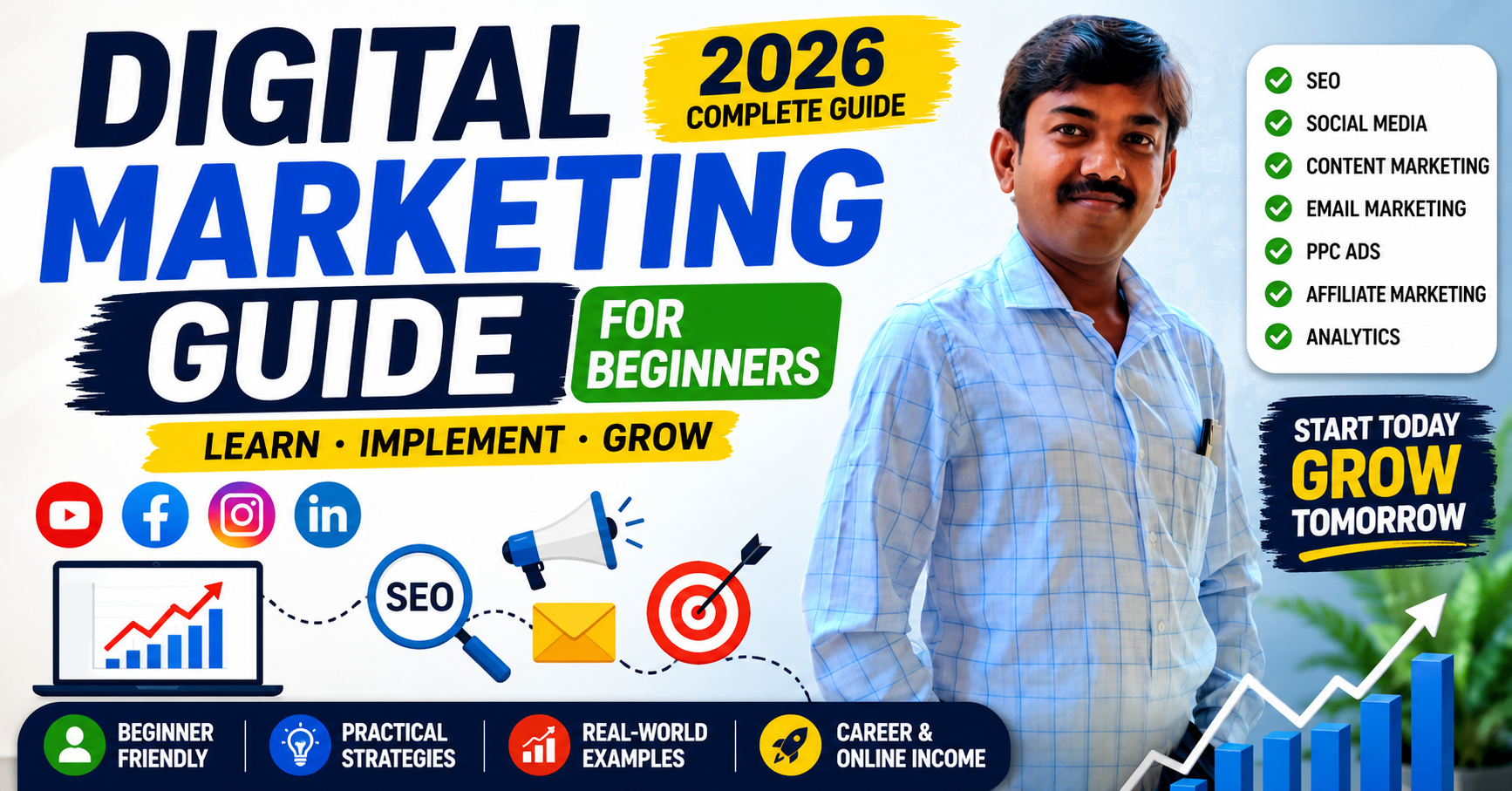
Digital Marketing Guide for Beginners (2026): Learn Digital Marketing Step by Step
Digital marketing has become one of the most valuable skills in today's world. Whether you're a student, job seeker, entrepreneur, freelancer, business owner, or content creator, understanding digital marketing can help you grow your career, promote your business, and reach a global audience.
Unlike traditional marketing, digital marketing allows businesses to connect with customers through websites, search engines, social media, email, videos, and online advertisements. Even small businesses can compete with large companies by using effective digital marketing strategies.
This beginner-friendly guide explains the fundamentals of digital marketing, the essential skills you need, career opportunities, and practical steps to start your journey.
What is Digital Marketing?
Digital marketing is the process of promoting products, services, or brands using digital platforms such as websites, search engines, social media, email, mobile applications, and online advertising.
Its primary goal is to attract potential customers, build relationships, increase brand awareness, and generate leads or sales.
Why Digital Marketing is Important
- Reach customers worldwide
- Lower marketing costs compared to traditional advertising
- Measure campaign performance easily
- Generate qualified leads
- Increase website traffic
- Improve brand visibility
- Build customer trust
- Grow online sales
Types of Digital Marketing
1. Search Engine Optimization (SEO)
SEO helps improve your website's visibility in search engine results. Higher rankings can increase organic traffic without paying for advertisements.
Important SEO activities include:
- Keyword Research
- On-Page SEO
- Technical SEO
- Link Building
- Content Optimization
2. Content Marketing
Content marketing focuses on creating valuable articles, videos, guides, podcasts, and other resources that educate or solve problems for your audience.
Examples:
- Blog Posts
- Videos
- Case Studies
- Infographics
- E-books
3. Social Media Marketing
Businesses use social media platforms to build communities, share content, engage with customers, and increase brand awareness.
Popular platforms include:
- YouTube
- X (Twitter)
4. Email Marketing
Email marketing helps businesses communicate directly with customers through newsletters, promotions, educational content, and updates.
5. Pay-Per-Click (PPC) Advertising
PPC allows businesses to display paid advertisements on search engines and social media platforms. Advertisers typically pay when someone clicks their ad.
6. Affiliate Marketing
Affiliate marketing allows individuals to earn commissions by recommending products or services using affiliate links.
7. Video Marketing
Videos have become one of the most effective ways to educate, entertain, and engage audiences across platforms like YouTube and social media.
Essential Digital Marketing Skills
- SEO Basics
- Content Writing
- Social Media Management
- Email Marketing
- Graphic Design Basics
- Video Editing
- Analytics & Reporting
- Communication Skills
- Copywriting
- Marketing Strategy
How to Learn Digital Marketing
- Learn SEO fundamentals.
- Understand social media platforms.
- Start writing blogs.
- Create a personal website.
- Practice using free marketing tools.
- Learn basic graphic design.
- Study website analytics.
- Practice consistently.
- Build your portfolio.
- Keep learning new trends.
Free Tools Every Beginner Should Know
| Tool | Purpose |
|---|---|
| Google Search Console | SEO Monitoring |
| Google Analytics | Website Analytics |
| Google Trends | Keyword Research |
| Canva | Graphic Design |
| ChatGPT | Content Ideas |
| YouTube Studio | Video Analytics |
| Google Keyword Planner | Keyword Research |
Career Opportunities in Digital Marketing
- SEO Specialist
- Digital Marketing Executive
- Content Writer
- Social Media Manager
- Email Marketing Specialist
- PPC Specialist
- Affiliate Marketer
- Digital Marketing Manager
- Freelancer
- Marketing Consultant
Common Beginner Mistakes
- Expecting quick results.
- Ignoring SEO.
- Posting inconsistent content.
- Not analyzing website data.
- Copying competitors without adding value.
- Using too many keywords unnaturally.
- Not learning continuously.
Daily Learning Plan
| Activity | Time |
|---|---|
| Read Digital Marketing Articles | 30 Minutes |
| Practice SEO | 30 Minutes |
| Create Content | 1 Hour |
| Learn Analytics | 30 Minutes |
| Study Competitors | 30 Minutes |
How Innosphere Helps You Learn Digital Marketing
Innosphere offers practical resources and career-focused tools to help beginners develop digital marketing skills.
- SEO Learning Guides
- Career Development Blogs
- Communication Skills Guide
- Resume Builder
- ATS Resume Checker
- Work From Home Resources
- Interview Preparation Guides
Frequently Asked Questions (FAQs)
Can beginners learn digital marketing?
Yes. Anyone can learn digital marketing by studying the fundamentals, practicing consistently, and applying the concepts through personal projects.
Do I need a marketing degree?
No. While formal education can help, many professionals learn digital marketing through online courses, hands-on experience, and continuous practice.
How long does it take to learn digital marketing?
You can understand the basics within a few months of regular practice. Becoming highly skilled usually requires ongoing learning and real-world experience.
Can I earn money with digital marketing?
Digital marketing skills can open opportunities such as full-time jobs, freelancing, consulting, affiliate marketing, and growing your own business. Income depends on your expertise, services, and market demand.
Conclusion
Digital marketing is one of the most in-demand skills in today's digital economy. It combines creativity, technology, communication, and data analysis to help businesses connect with customers and grow online.
Start with the basics, practice regularly, create valuable content, and continue learning as the industry evolves. Over time, these skills can support career growth, entrepreneurship, or freelance opportunities.