
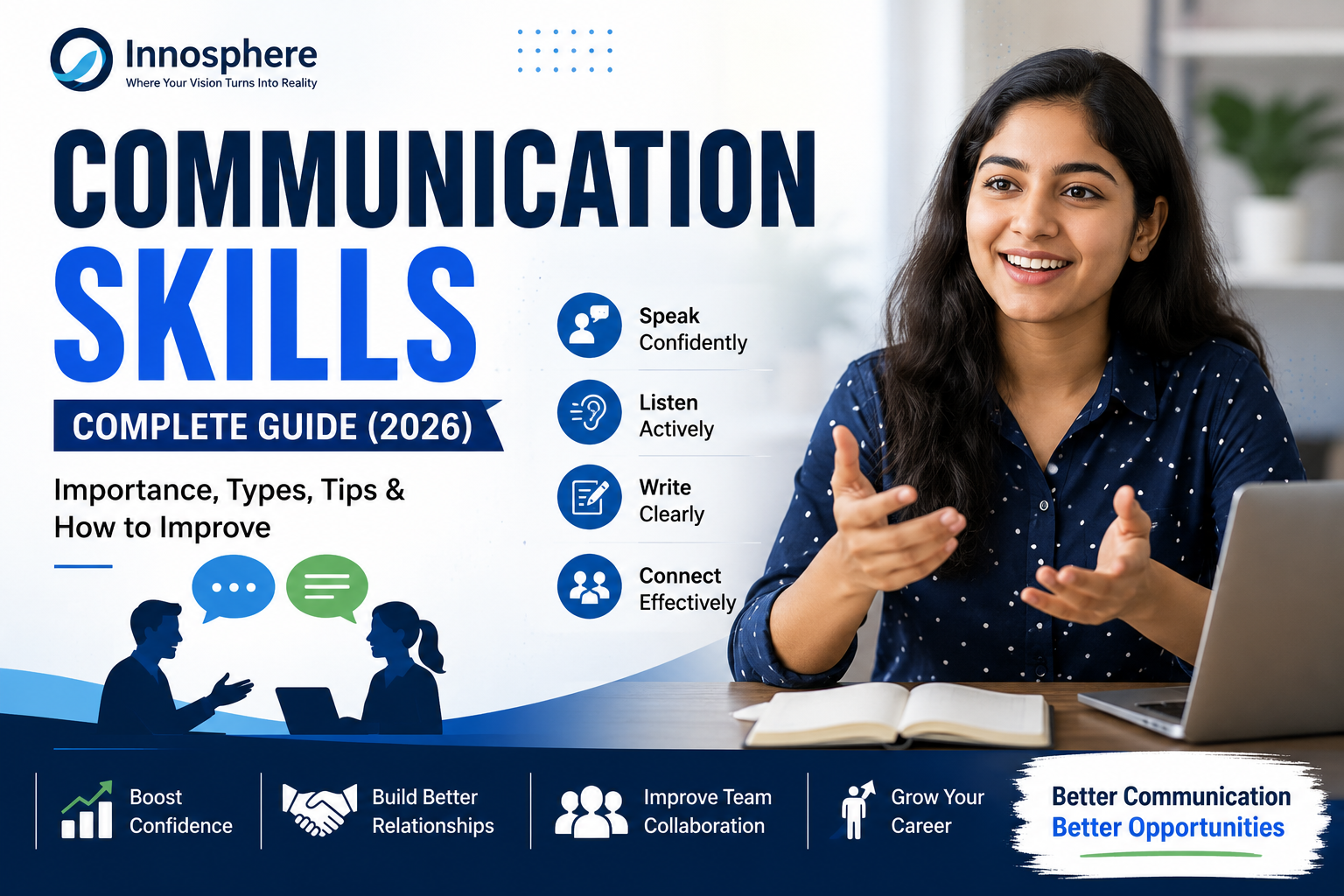
Communication Skills Guide (2026): Importance, Types & Practical Tips
Communication is one of the most valuable skills in today's professional and personal life. Whether you're attending an interview, leading a team, speaking with clients, or interacting with colleagues, effective communication helps you build trust, express ideas clearly, and achieve your goals.
Strong communication skills are not limited to speaking English fluently. They include listening, understanding, presenting ideas, writing professionally, and adapting your message to different audiences.
In this guide, you'll learn what communication skills are, why they matter, different types of communication, practical improvement tips, common mistakes, and how these skills can accelerate your career.
What Are Communication Skills?
Communication skills refer to the ability to share information, ideas, thoughts, and emotions clearly and effectively. Good communication is a two-way process—it involves speaking confidently, listening actively, understanding others, and responding appropriately.
Why Communication Skills Are Important
- Create a positive first impression.
- Improve confidence during interviews.
- Build stronger workplace relationships.
- Increase teamwork and collaboration.
- Reduce misunderstandings.
- Improve leadership abilities.
- Support career growth and promotions.
- Enhance customer satisfaction.
- Develop professional credibility.
- Help resolve conflicts effectively.
Types of Communication
1. Verbal Communication
Speaking clearly and confidently during meetings, interviews, presentations, and conversations.
2. Non-Verbal Communication
- Facial expressions
- Eye contact
- Body language
- Hand gestures
- Posture
3. Written Communication
Writing professional emails, reports, resumes, cover letters, and messages with proper grammar and clarity.
4. Listening Skills
Active listening means understanding the speaker before responding. Listening carefully improves relationships and reduces misunderstandings.
Communication Skills Required at Work
- Professional speaking
- Email etiquette
- Presentation skills
- Team discussions
- Client communication
- Problem-solving discussions
- Meeting participation
- Negotiation skills
- Leadership communication
Communication Skills for Interviews
Interviewers evaluate more than your technical knowledge. They also assess how confidently and professionally you communicate.
- Introduce yourself confidently.
- Maintain eye contact.
- Answer questions clearly.
- Avoid unnecessary filler words.
- Listen carefully before responding.
- Speak honestly and professionally.
How to Improve Communication Skills
1. Read Every Day
Reading books, newspapers, and professional articles improves vocabulary and comprehension.
2. Practice Speaking
Speak in front of a mirror or record yourself to identify areas for improvement.
3. Improve Your Vocabulary
- Learn 5–10 new words daily.
- Use them in conversations.
- Understand their context.
4. Become a Better Listener
Listen without interrupting. Focus on understanding rather than immediately replying.
5. Join Group Discussions
Participating in discussions helps improve confidence, clarity, and teamwork.
6. Practice Public Speaking
Present your ideas regularly, even in small groups. Confidence grows with experience.
Common Communication Mistakes
- Speaking too fast.
- Not listening carefully.
- Poor eye contact.
- Negative body language.
- Using unclear language.
- Interrupting others.
- Poor email etiquette.
- Overusing jargon.
- Ignoring feedback.
Benefits of Strong Communication Skills
| Area | Benefits |
|---|---|
| Career | Better job opportunities and promotions. |
| Business | Improved client relationships. |
| Leadership | Better team management. |
| Education | Improved learning and presentations. |
| Personal Life | Stronger relationships and understanding. |
Daily Communication Practice Checklist
- ? Read for 20 minutes.
- ? Learn 5 new words.
- ? Practice speaking for 10 minutes.
- ? Listen to a podcast or presentation.
- ? Write one professional email.
- ? Observe your body language.
- ? Participate in one meaningful conversation.
Frequently Asked Questions
Can communication skills be improved?
Yes. Communication skills improve through consistent practice, active listening, reading, and speaking in different situations.
Why do employers value communication skills?
Employees with strong communication skills collaborate better, solve problems effectively, and build stronger relationships with customers and colleagues.
Is communication only about speaking English?
No. Effective communication involves listening, understanding, writing, presenting ideas clearly, and adapting your message to different audiences, regardless of the language you use.
How Innosphere Helps You Grow
At Innosphere, we provide free career tools and practical resources to help students, freshers, and professionals succeed.
- Free Resume Builder
- ATS Resume Checker
- Interview Preparation Guides
- HR Interview Questions
- Self Introduction Guide
- Career Objective Examples
- Salary & Career Tools
- HR Document Formats
Conclusion
Communication is more than just speaking—it is the ability to connect with people, express ideas clearly, and build meaningful relationships. Strong communication skills can improve your confidence, increase career opportunities, and help you succeed in every stage of your professional journey.
Start with small daily improvements. Read regularly, listen actively, practice speaking, and seek feedback. Over time, these habits will strengthen your communication skills and open new opportunities for personal and professional growth.